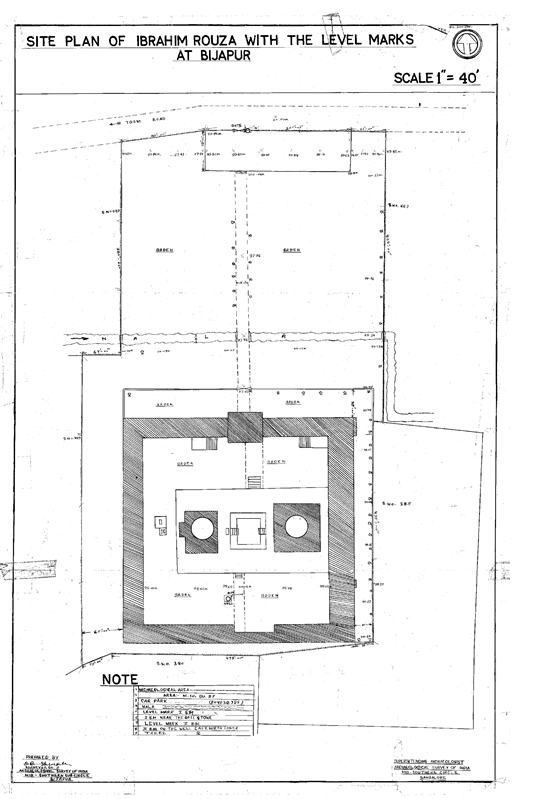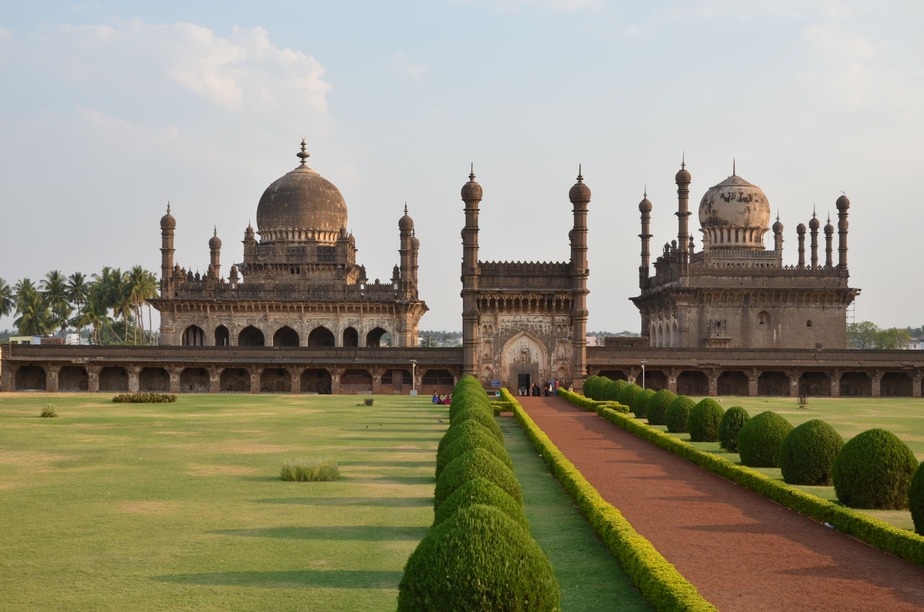
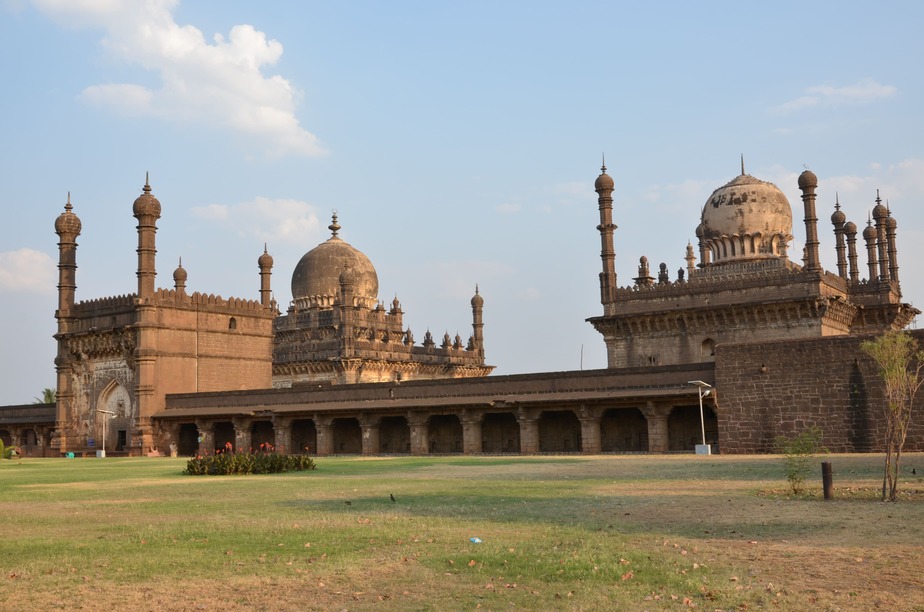
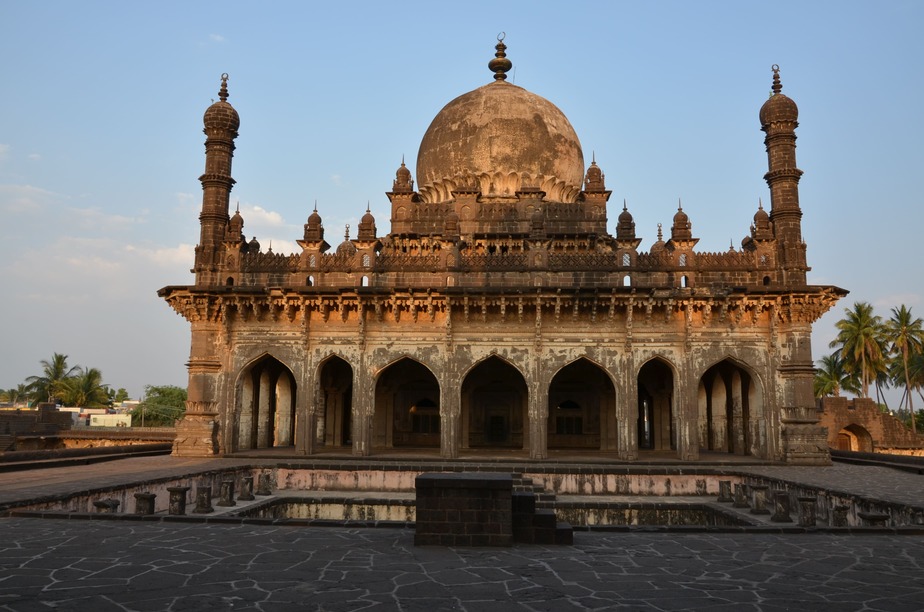
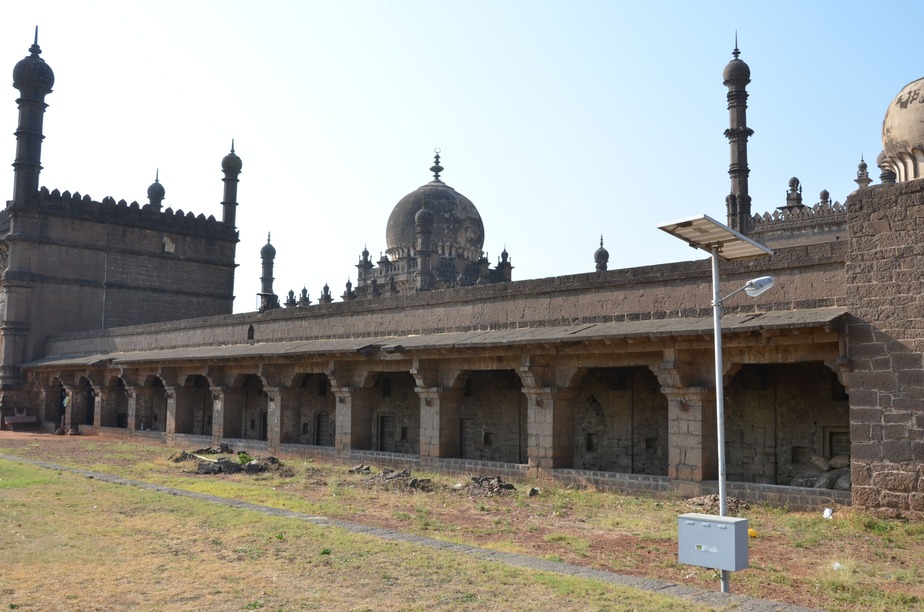
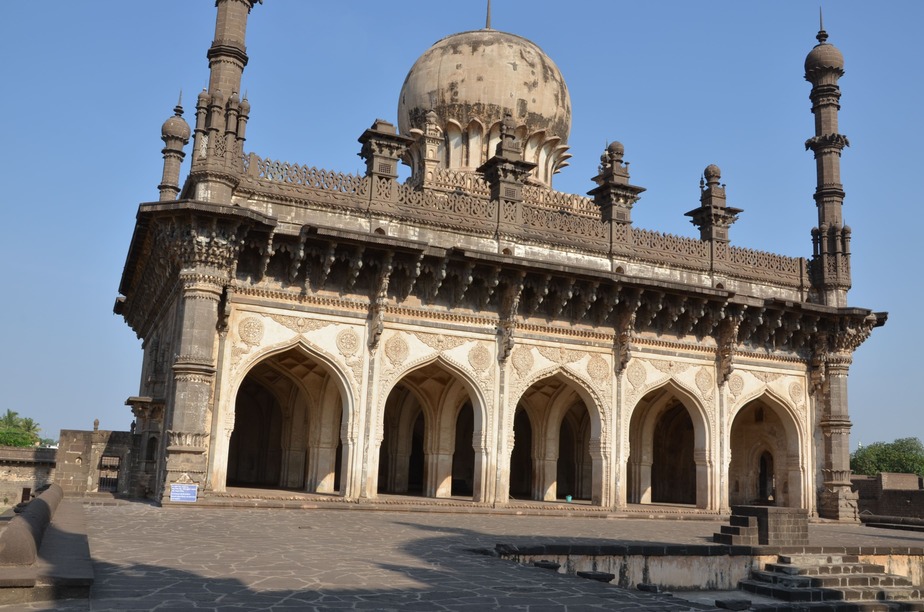
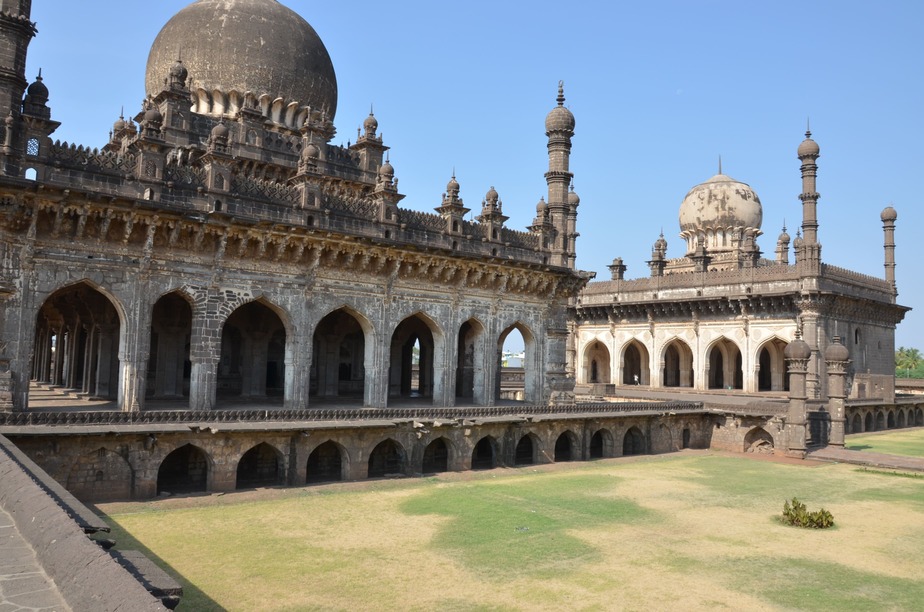
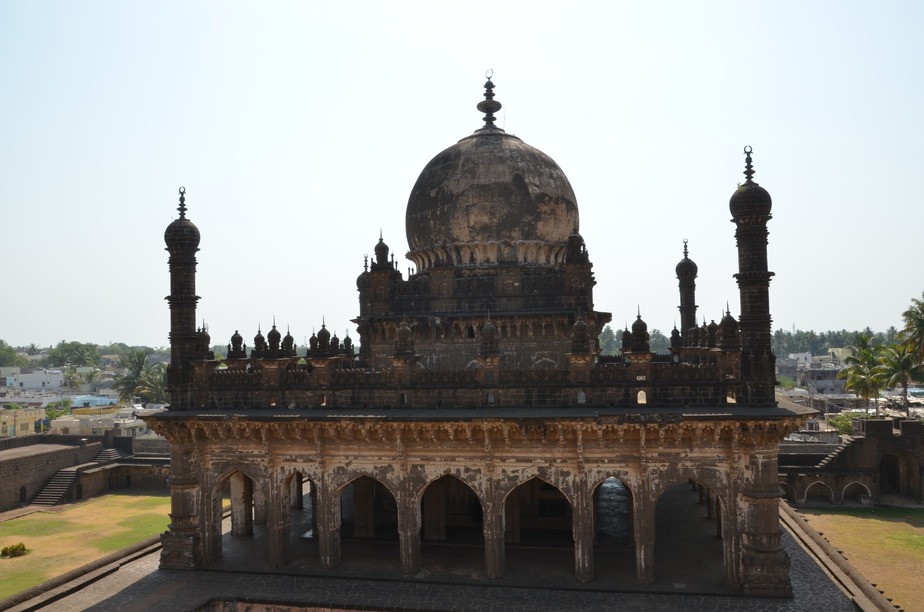
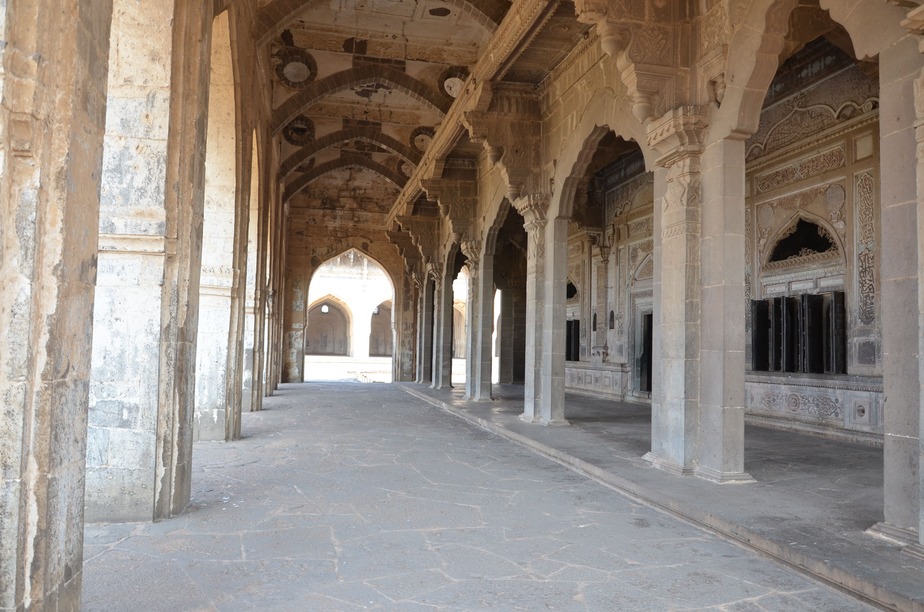
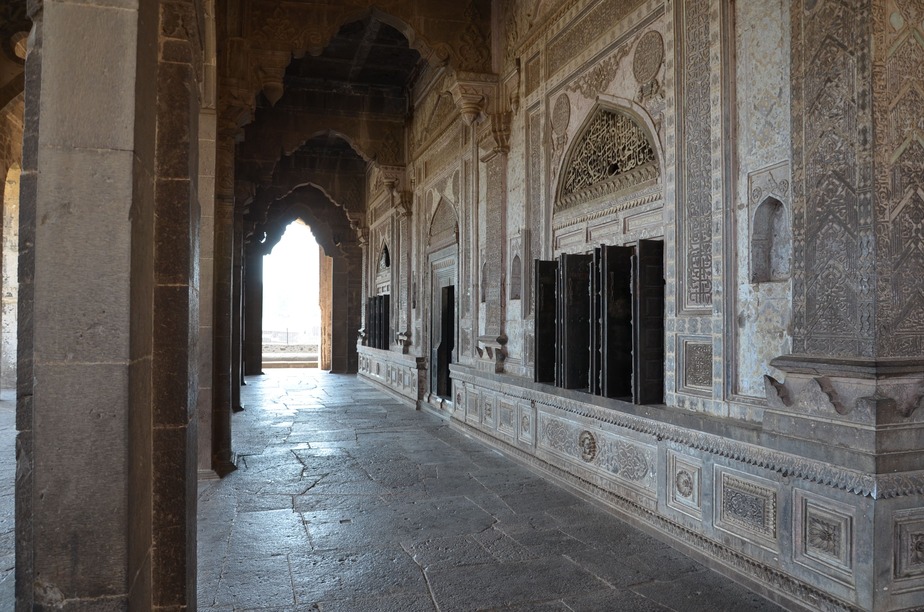
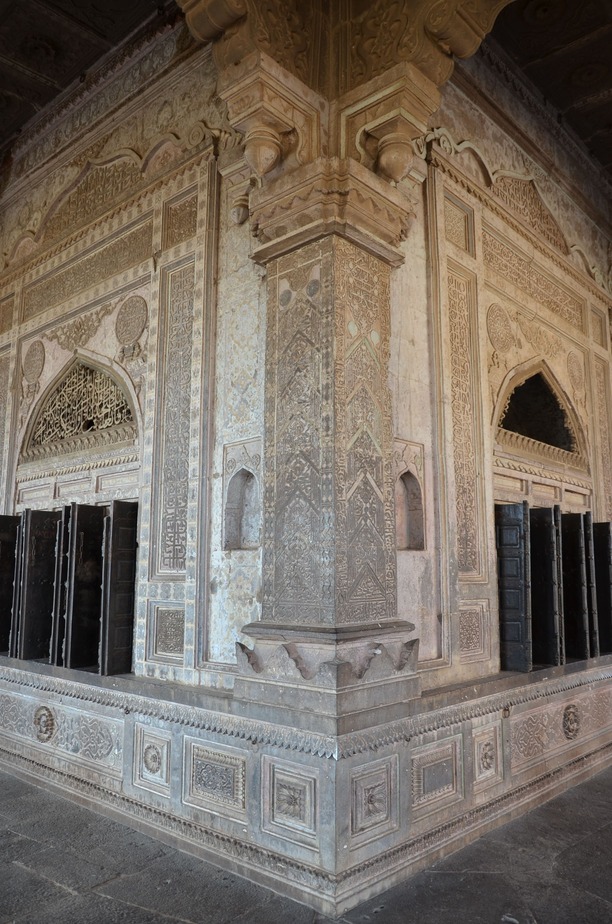
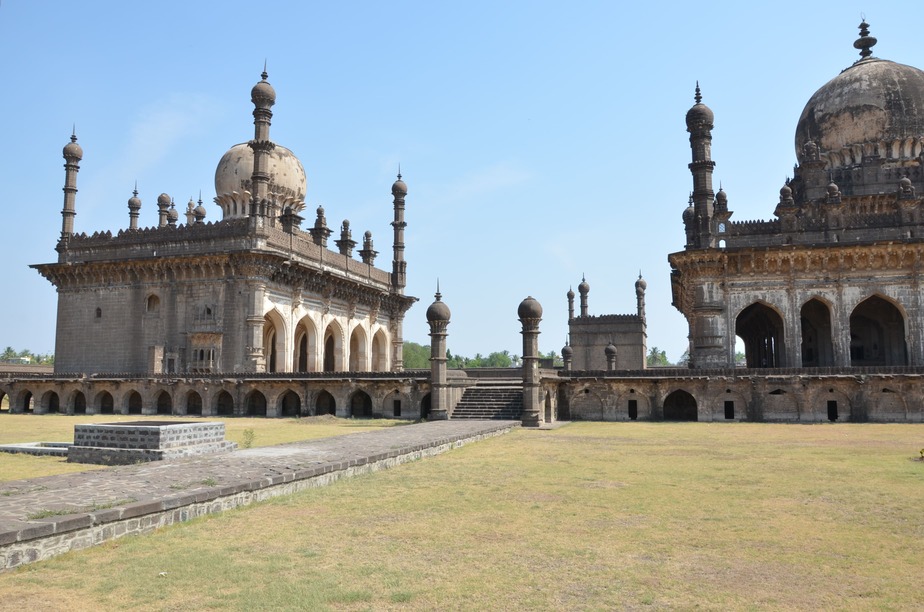
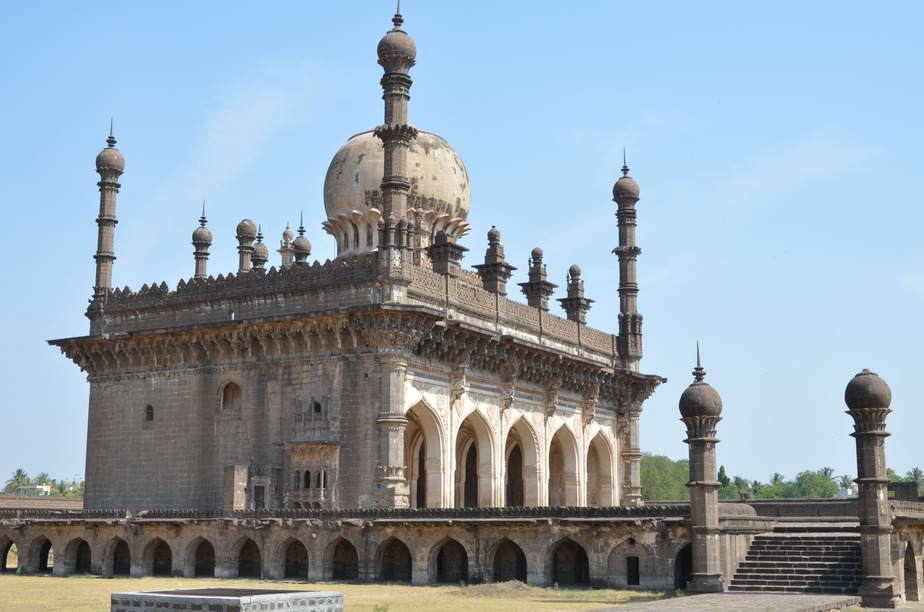
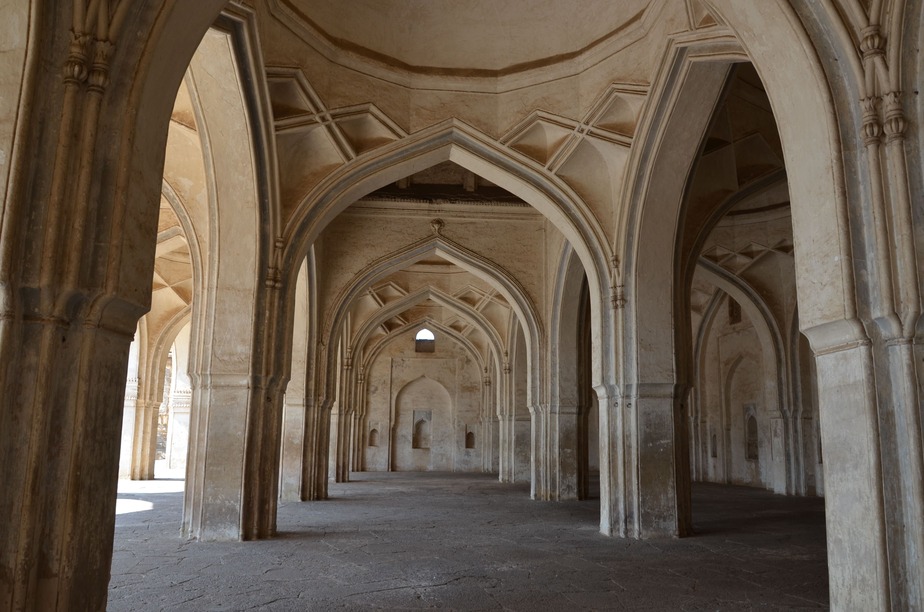
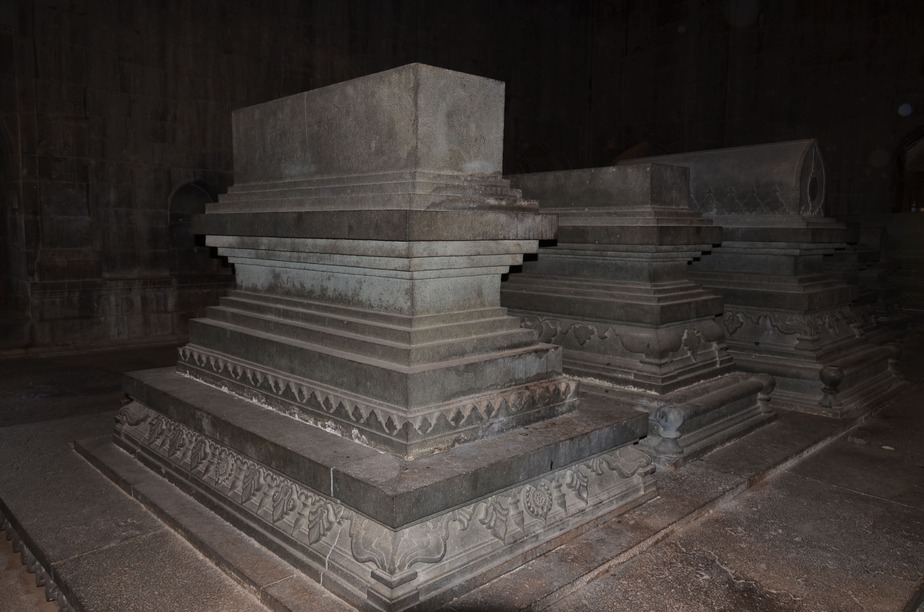
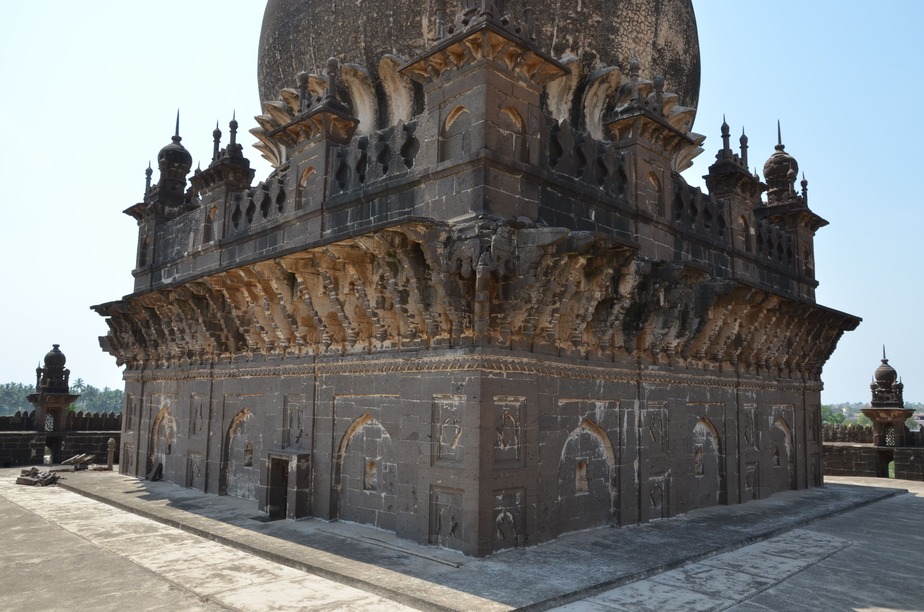
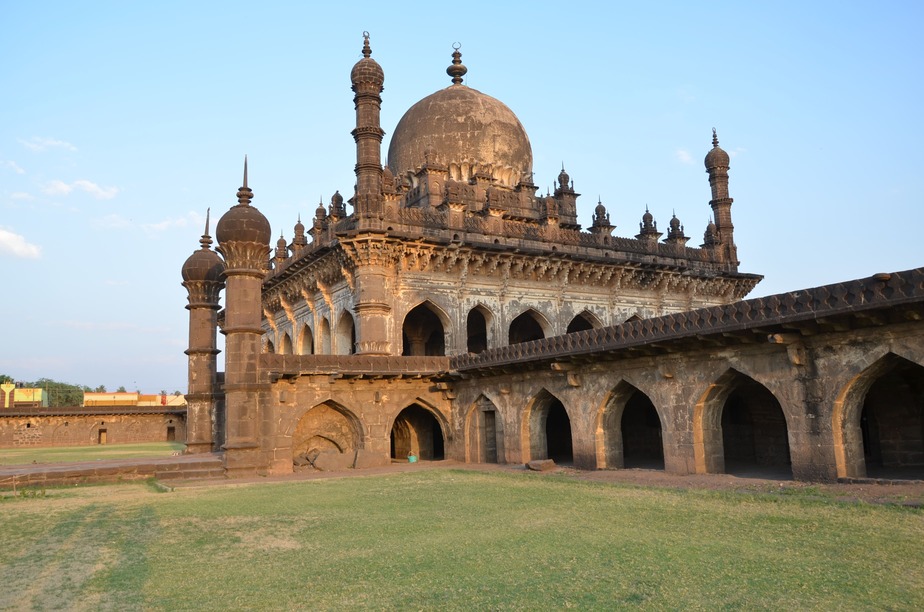
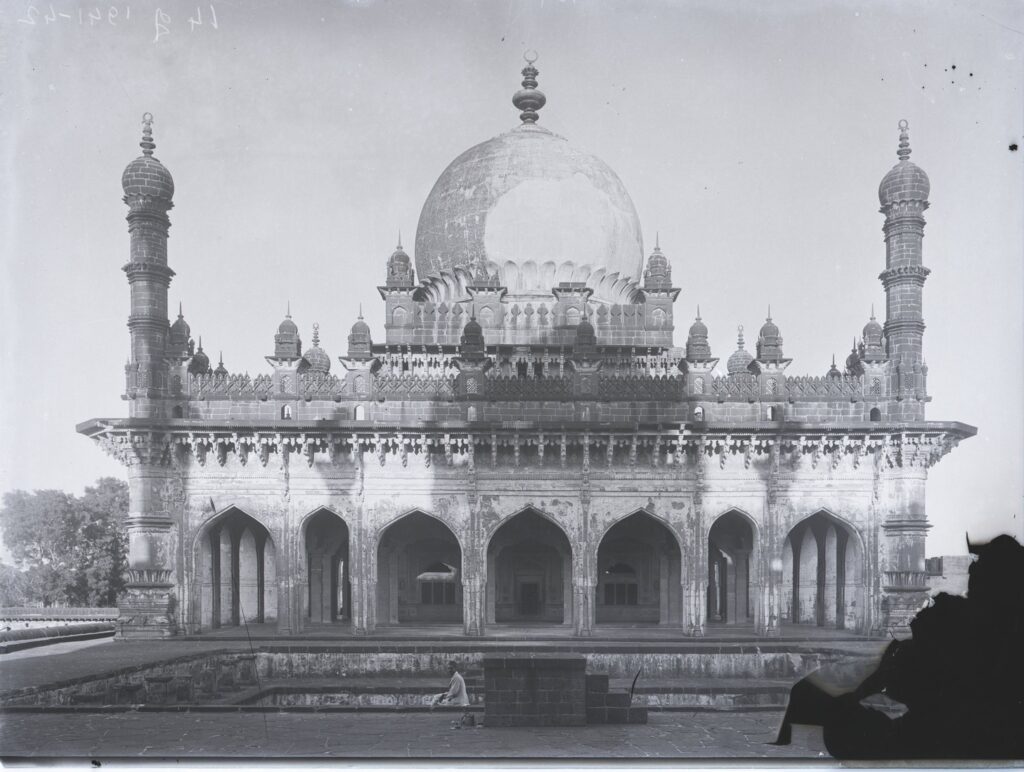
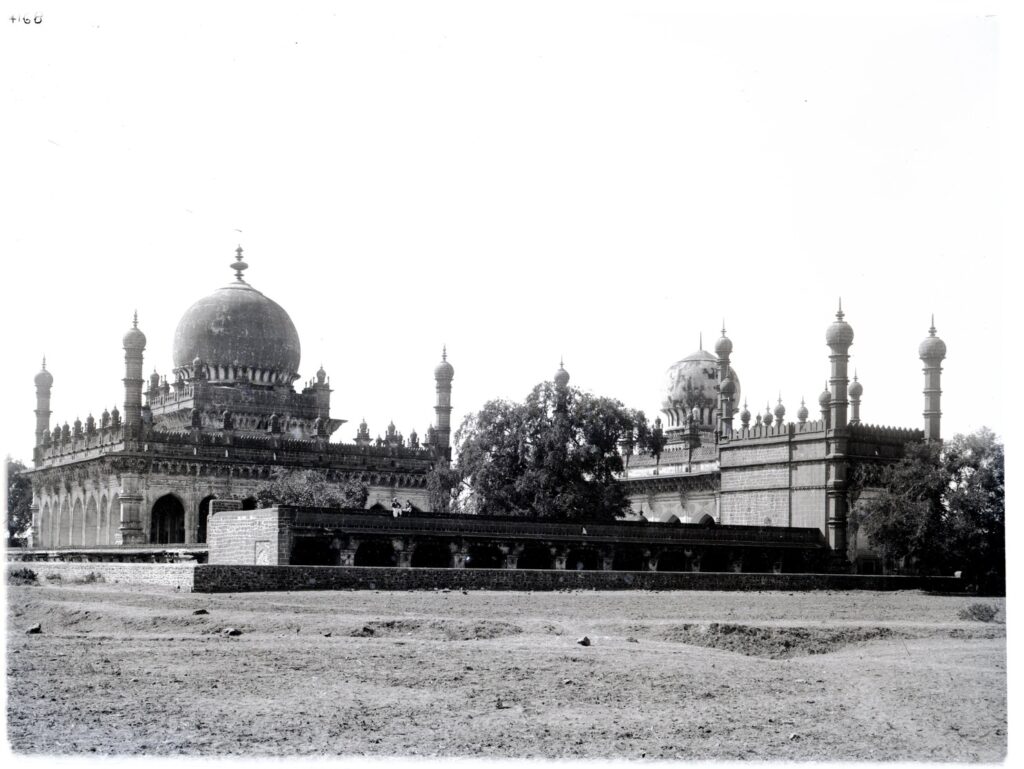
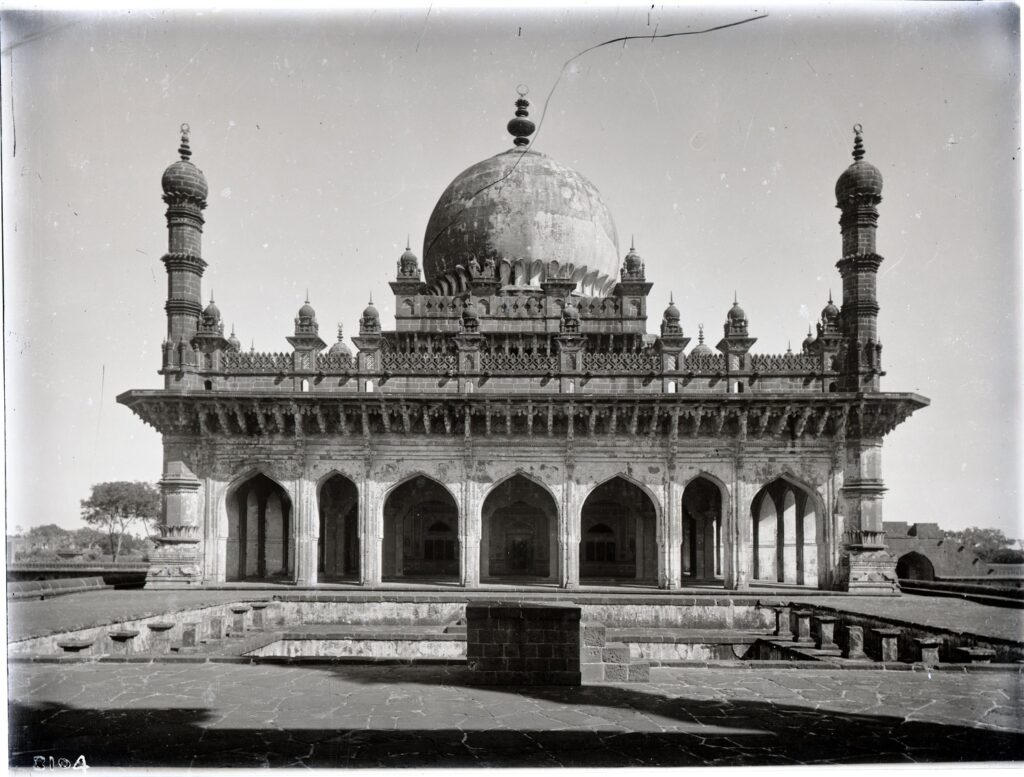
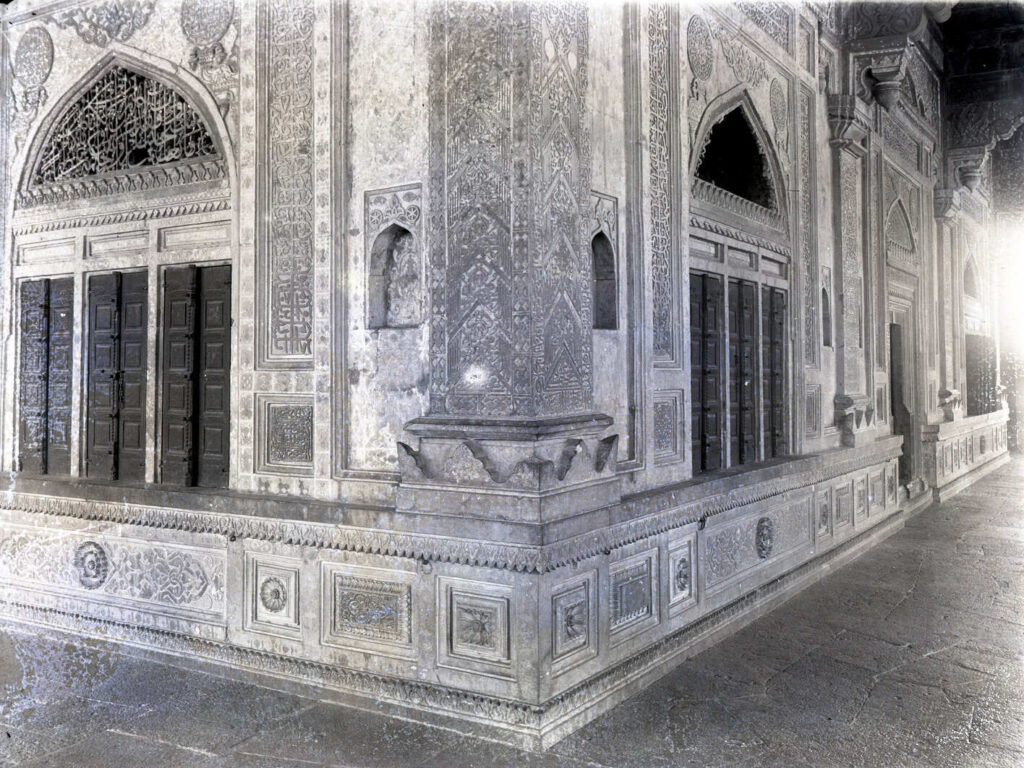
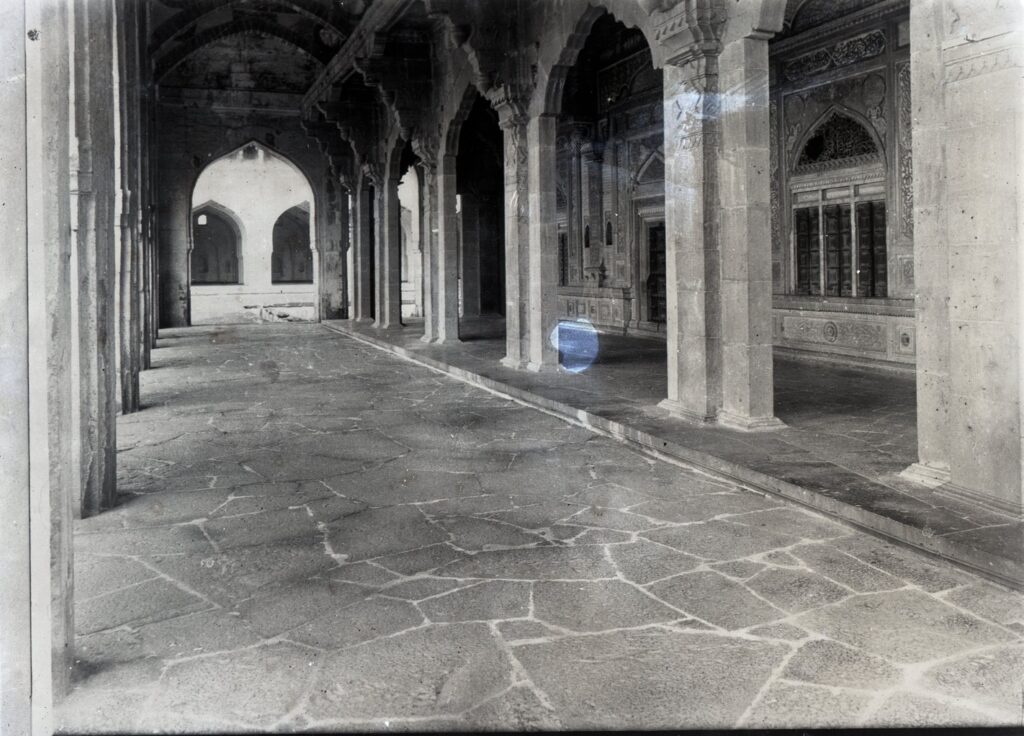
Ibrahim Rouza was constructed in CE 1626 by Ibrahim Adil Shah II, the 6th Sultan of AdilShahi dynasty. It stands as a beautiful and picturesque group of two beautiful building which include the tomb in the east, a mosque to the west and a water tank amidst the two. The magnificent group stands upon a high terrace in a rectangular enclosure about 138 x 138 sq. meters with a lofty entrance tower in the middle of the north wall ornamented with four graceful minarets. This edifice is better known for the east side of the terrace is the mausoleum of king Ibrahim II, his wife Taj Sultan and his family. The tomb is surmounted by a dome resting on a square rising out of the flat roof of the sepulchre is most elaborated. Each of the four sides is a doorway flanked by exquisites ornamented window with interlaced Arabic calligraphy. The most remarkable feature is its hanging ceiling. It is composed of stone slab with no apparent means of support. Around the tomb, is a colonnaded verandah with a beautifully carved and decorated ceiling. To the west, is the mosque in similar style with fine elegant arches beneath a detailed cornice with chains carved from single block of a stone. It is one of the finest example of Islamic ornamental decoration in India.
ಇಬ್ರಾಹಿಂ ರೋಜಾ, ಆದಿಲ್ ಷಾಹಿ ಶೈಲಿಯಲ್ಲಿ ನಿರ್ಮಿತವಾದ ಪ್ರಮುಖವೂ ಸುಂದರವೂ ಆದ ಕಟ್ಟಡ. ಇದನ್ನು 2ನೇ ಇಬ್ರಾಹಿಂ ಆದಿಲ್ ಷಾ (ಆದಿಲ್ ಷಾ ಸಂತತಿಯ 6ನೇ ಸುಲ್ತಾನ್) ಕ್ರಿ.ಶ. 1626ರಲ್ಲಿ ನಿರ್ಮಿಸಿದನು. ಇಬ್ರಾಹಿಂ ರೋಜಾದ ಪ್ರಮುಖ ಕಟ್ಟಡಗಳಲ್ಲಿ ಪೂರ್ವಕ್ಕೆ ಒಂದು ಗೋರಿ, ಪಶ್ಚಿಮಕ್ಕೆ ಒಂದು ಮಸೀದಿ, ಅವುಗಳ ನಡುವೆ ಒಂದು ಚತುರಸ್ರಾಕಾರದ ಹೊಂಡವಿದೆ. ಪಶ್ಚಿಮದಿಕ್ಕಿಗೆ ಇರುವ ಈ ಗೋರಿಯು ಸುಮಾರು 138 x 138 ಚದರ ಅಡಿಗಳಷ್ಟು ತಳತೆಯ ಆಯತಾಕಾರದ ಕಟ್ಟಡ. ಇಲ್ಲಿ ಎತ್ತರವಾದ ಜಗತಿಯ ಮೇಲೆ ಮತ್ತು ಚತುರಸ್ರ ಆವರಣದ ಮಧ್ಯದಲ್ಲಿ ಒಂದಕ್ಕೊಂದು ಎದುರಾಗಿರುವ ಎರಡು ದೊಡ್ಡ ಕಟ್ಟಡಗಳು ಇವೆ. ಈ ಕಟ್ಟಡದ ಬಲಭಾಗದಲ್ಲಿರುವ ಇಬ್ರಾಹಿಂ ದೊರೆಯ ಗೋರಿಯು ನಾಲ್ಕು ಗೋಪುರಗಳಿಂದ ಕೂಡಿದೆ. ಇವು ಆ ಕಾಲದ ಸಮೃದ್ಧಿ ಮತ್ತು ಶ್ರಿಮಂತಿಕೆಯನ್ನು ಬಿಂಬಿಸುತ್ತವೆ. ಜಗತಿಯ ಪೂರ್ವಭಾಗದಲ್ಲಿ 2ನೇ ಇಬ್ರಾಹಿಂ, ಅವನ ಹೆಂಡತಿ ತಾಜ್ ಸುಲ್ತಾನ ಮತ್ತು ಕುಟುಂಬದವರ ಕಬರಸ್ತಾನವಿದೆ. ಈ ಸಮಾಧಿಯ ಸುತ್ತಲೂ ಸುಂದರ ಗುಮ್ಮಟಗಳ ರಚನೆ ಇದೆ ಮತ್ತು ಅದು ವಿಶಾಲವಾದ ಚತುರಸ್ರ ಆಂಗಣದಲ್ಲಿಯೇ ಅಲಂಕೃತಗೊಂಡಿದೆ. ಈ ವಿಶಾಲವಾದ ಚತುರಸ್ರ ಆಂಗಣವು ಚಿಕ್ಕಚಿಕ್ಕ ಮೀನಾರುಗಳಿಂದ ಅಲಂಕೃತಗೊಂಡಿದೆ. ಗೋರಿಯ ನಾಲ್ಕು ಗೋಡೆಗಳ ಮೇಲೆ ಅರೇಬಿಕ್ ಶೈಲಿಯ ಹೂಗಳ ಅಲಂಕಾರಗಳಿವೆ. ಪ್ರತಿಗೋಡೆಯ ಮಧ್ಯೆ ಒಂದು ಪ್ರವೇಶದ್ವಾರವಿದೆ. ಅದರ ಎರಡೂ ಭಾಗಗಳು ಅರೇಬಿಕ್ ಅಕ್ಷರಗಳಿಂದ ಅಲಂಕೃತಗೊಂಡ ಕಿಟಕಿಗಳಿಂದ ಆವೃತಗೊಂಡಿವೆ. ಜಗತಿಯ ಪಶ್ಚಿಮಭಾಗದಲ್ಲಿ ಕಬರಸ್ತಾನಕ್ಕೆ ಎದುರಾಗಿರುವ ಮಸೀದಿ, ಗಾತ್ರದಲ್ಲಿ ಅಷ್ಟೇ ಎತ್ತರದಲ್ಲಿದೆ ಮತ್ತು ದೊಡ್ಡದಿದೆ. ಅದ್ಭುತವಾದ ಆಧಾರವಿಲ್ಲದ ಕಲ್ಲಿನ ಮೇಲ್ಛಾವಣಿ (ಸೀಲಿಂಗ್) ಯೊಂದಿಗೆ ಏಕಶಿಲಾ ಸರಪಳಿ ಈ ಕಟ್ಟಡದ ಪ್ರಮುಖ ಲಕ್ಷಣವಾಗಿದೆ. ಇದು ಭಾರತದ ಇಸ್ಲಾಮಿಕ್ ಶೈಲಿಯ ಅಲಂಕಾರ ಕಟ್ಟಡಕ್ಕೆ ಪ್ರಮುಖ ಉದಾಹರಣೆಯಾಗಿದೆ.
ಈ ಶುದ್ಧೀಕೃತ ಬರವಣಿಗೆ ಈಗ ಸರಿಯಾಗಿ ಓದಲು, ನಕಲಿಸಲು (copy) ಮತ್ತು ಪ್ರಸ್ತುತಪಡಿಸಲು ಯೋಗ್ಯವಾಗಿದೆ. ಇನ್ನು ಈ ಶೈಲಿಯಂತೆಯೇ ಇನ್ನಷ್ಟು ಪ್ಯಾರಾಗ್ರಾಫ್ಗಳನ್ನು ಶುದ್ಧಮಾಡಬೇಕಾದರೆ, ದಯವಿಟ್ಟು ಕಳುಹಿಸಿ.
Bibliography: –
- Cousens, H. Bijapur and its architectural remains, ASI Publications New Delhi – 1995.
- Gazetteer of India, Mysore State, Bijapur District, Bangalore – 1996
- Daddi, H.G., Glimpses of Adil Shahi monuments, Sri R.A.Nyamagoudar, Jamakhandi, 2002.
- Nayeem, M.A., The Heritage of the Adil shahis of Bijaypur, HyderabadPublishers, Hyderabad, 2008.
- Imaratwale, Abdul Gani., History of Bijapur Subah, Islamic Wonders Bureau, New Delhi, 2007.
- Philon, Helen, Gulbarga Bidar Bijapur, Jaico Publishing house, Mumbai, 2016.
- Rajput, Abdul Aziz., A Historical Guide to Bijapur Monuments, Abu-Hureira Educational Services, Bijapur, 2010.
Video Documentary
Bijapura English broucher
Bijapura Kannada broucher